Data pools
Role: Data Architect, Data Owner, Data Steward
Goal: Organize DatasetsDatasetA data-related element that contains processed data and makes it available for consumption. A Dataset is populated via Pipelines and carries Metadata and access permissions. into Data poolsData poolA governed, centralized collection of Datasets that are managed together within the Platform. It provides a shared place to organize, discover, and access data, including associated metadata, ownership, and access permissions. With Data pools users can cluster their Datasets according to their organizational structure (e.g., by Departments, Offices)., control access on a higher level, and manage shared ownership and governance.
Required Permissions: read Data poolData poolA governed, centralized collection of Datasets that are managed together within the Platform. It provides a shared place to organize, discover, and access data, including associated metadata, ownership, and access permissions. With Data pools users can cluster their Datasets according to their organizational structure (e.g., by Departments, Offices)., create Data poolData poolA governed, centralized collection of Datasets that are managed together within the Platform. It provides a shared place to organize, discover, and access data, including associated metadata, ownership, and access permissions. With Data pools users can cluster their Datasets according to their organizational structure (e.g., by Departments, Offices)., update Data poolData poolA governed, centralized collection of Datasets that are managed together within the Platform. It provides a shared place to organize, discover, and access data, including associated metadata, ownership, and access permissions. With Data pools users can cluster their Datasets according to their organizational structure (e.g., by Departments, Offices)., delete Data poolData poolA governed, centralized collection of Datasets that are managed together within the Platform. It provides a shared place to organize, discover, and access data, including associated metadata, ownership, and access permissions. With Data pools users can cluster their Datasets according to their organizational structure (e.g., by Departments, Offices).; read DatasetDatasetA data-related element that contains processed data and makes it available for consumption. A Dataset is populated via Pipelines and carries Metadata and access permissions., create DatasetDatasetA data-related element that contains processed data and makes it available for consumption. A Dataset is populated via Pipelines and carries Metadata and access permissions., update DatasetDatasetA data-related element that contains processed data and makes it available for consumption. A Dataset is populated via Pipelines and carries Metadata and access permissions.
What is a Data pool?
Data poolsData poolA governed, centralized collection of Datasets that are managed together within the Platform. It provides a shared place to organize, discover, and access data, including associated metadata, ownership, and access permissions. With Data pools users can cluster their Datasets according to their organizational structure (e.g., by Departments, Offices). help organize related DatasetsDatasetA data-related element that contains processed data and makes it available for consumption. A Dataset is populated via Pipelines and carries Metadata and access permissions. within the Platform. They provide a shared context for ownership, access management, and Data sourceData sourceA data-related element that represents the origin of data. It defines how data is connected, accessed, and ingested into the Platform, such as an external database or sensor network. availability across multiple DatasetsDatasetA data-related element that contains processed data and makes it available for consumption. A Dataset is populated via Pipelines and carries Metadata and access permissions..
Assigning a DatasetDatasetA data-related element that contains processed data and makes it available for consumption. A Dataset is populated via Pipelines and carries Metadata and access permissions. to a Data poolData poolA governed, centralized collection of Datasets that are managed together within the Platform. It provides a shared place to organize, discover, and access data, including associated metadata, ownership, and access permissions. With Data pools users can cluster their Datasets according to their organizational structure (e.g., by Departments, Offices). is optional, but recommended.
What you will achieve
After completing this guide, you will have:
- Create and manage Data poolsData poolA governed, centralized collection of Datasets that are managed together within the Platform. It provides a shared place to organize, discover, and access data, including associated metadata, ownership, and access permissions. With Data pools users can cluster their Datasets according to their organizational structure (e.g., by Departments, Offices).
- Assign DatasetsDatasetA data-related element that contains processed data and makes it available for consumption. A Dataset is populated via Pipelines and carries Metadata and access permissions. to Data poolsData poolA governed, centralized collection of Datasets that are managed together within the Platform. It provides a shared place to organize, discover, and access data, including associated metadata, ownership, and access permissions. With Data pools users can cluster their Datasets according to their organizational structure (e.g., by Departments, Offices).
- Configure access on Data poolData poolA governed, centralized collection of Datasets that are managed together within the Platform. It provides a shared place to organize, discover, and access data, including associated metadata, ownership, and access permissions. With Data pools users can cluster their Datasets according to their organizational structure (e.g., by Departments, Offices). level
- Restrict Data sourceData sourceA data-related element that represents the origin of data. It defines how data is connected, accessed, and ingested into the Platform, such as an external database or sensor network. availability for Data poolsData poolA governed, centralized collection of Datasets that are managed together within the Platform. It provides a shared place to organize, discover, and access data, including associated metadata, ownership, and access permissions. With Data pools users can cluster their Datasets according to their organizational structure (e.g., by Departments, Offices).
- Organize DatasetsDatasetA data-related element that contains processed data and makes it available for consumption. A Dataset is populated via Pipelines and carries Metadata and access permissions. within a shared governance context
Common use cases for Data pools
Use Data poolsData poolA governed, centralized collection of Datasets that are managed together within the Platform. It provides a shared place to organize, discover, and access data, including associated metadata, ownership, and access permissions. With Data pools users can cluster their Datasets according to their organizational structure (e.g., by Departments, Offices). when:
- multiple DatasetsDatasetA data-related element that contains processed data and makes it available for consumption. A Dataset is populated via Pipelines and carries Metadata and access permissions. belong together
- ownership is shared
- permissions should be managed consistently
- DatasetsDatasetA data-related element that contains processed data and makes it available for consumption. A Dataset is populated via Pipelines and carries Metadata and access permissions. represent one organisational unit
Avoid creating Data poolsData poolA governed, centralized collection of Datasets that are managed together within the Platform. It provides a shared place to organize, discover, and access data, including associated metadata, ownership, and access permissions. With Data pools users can cluster their Datasets according to their organizational structure (e.g., by Departments, Offices). for individual DatasetsDatasetA data-related element that contains processed data and makes it available for consumption. A Dataset is populated via Pipelines and carries Metadata and access permissions. only.
Create and edit a Data pool
- Go to Data poolsData poolA governed, centralized collection of Datasets that are managed together within the Platform. It provides a shared place to organize, discover, and access data, including associated metadata, ownership, and access permissions. With Data pools users can cluster their Datasets according to their organizational structure (e.g., by Departments, Offices).
- Click Create Data poolData poolA governed, centralized collection of Datasets that are managed together within the Platform. It provides a shared place to organize, discover, and access data, including associated metadata, ownership, and access permissions. With Data pools users can cluster their Datasets according to their organizational structure (e.g., by Departments, Offices).
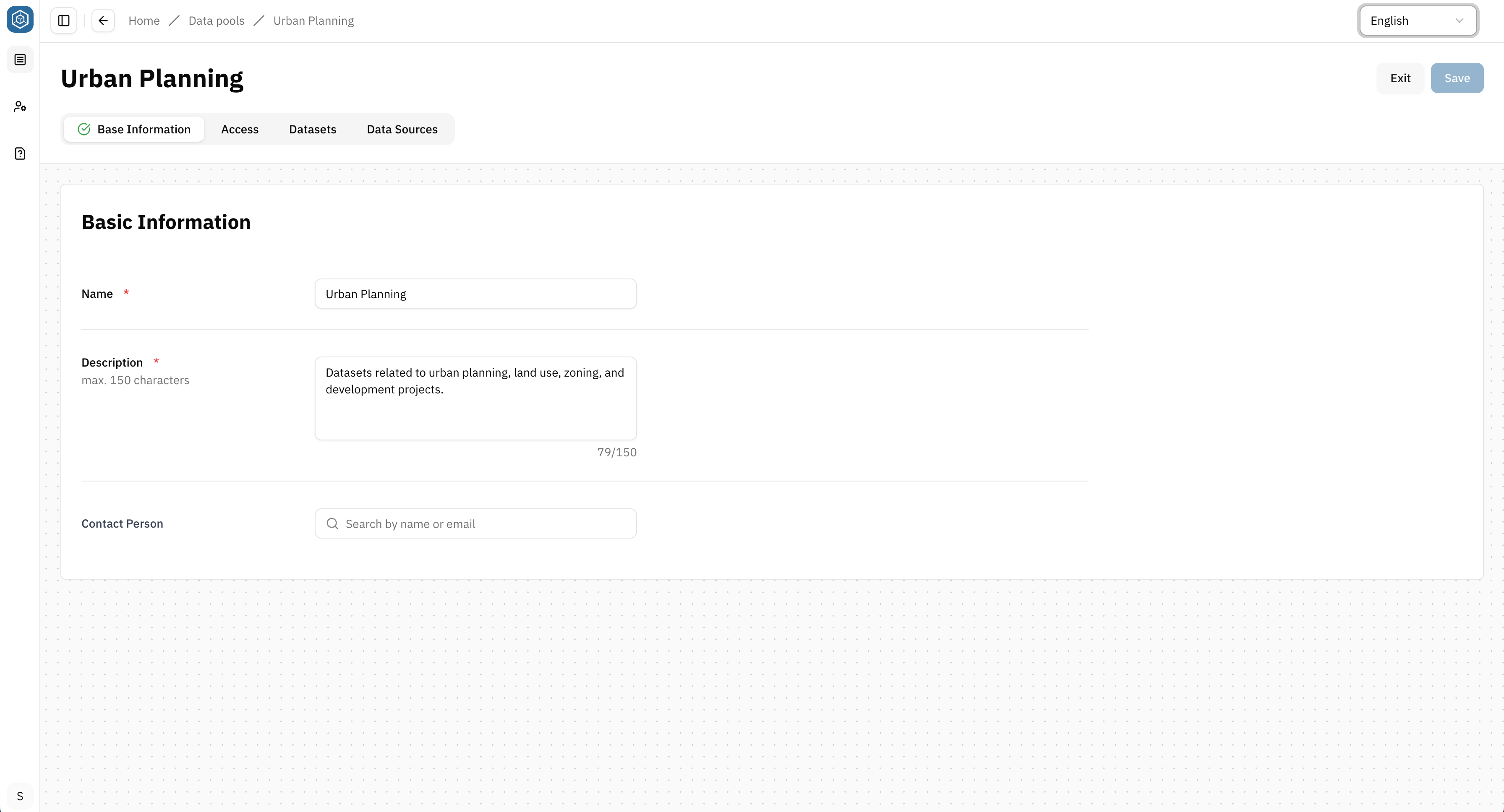
- Define Name, Description and Owner in the 1st tab Base information
- Hit Save
The Data poolData poolA governed, centralized collection of Datasets that are managed together within the Platform. It provides a shared place to organize, discover, and access data, including associated metadata, ownership, and access permissions. With Data pools users can cluster their Datasets according to their organizational structure (e.g., by Departments, Offices). exists now but contains no DatasetsDatasetA data-related element that contains processed data and makes it available for consumption. A Dataset is populated via Pipelines and carries Metadata and access permissions..
Add Datasets to a Data pool
Assign an existing Dataset
- Go to DatasetsDatasetA data-related element that contains processed data and makes it available for consumption. A Dataset is populated via Pipelines and carries Metadata and access permissions.
- Open a specific DatasetDatasetA data-related element that contains processed data and makes it available for consumption. A Dataset is populated via Pipelines and carries Metadata and access permissions.
- Select a Data poolData poolA governed, centralized collection of Datasets that are managed together within the Platform. It provides a shared place to organize, discover, and access data, including associated metadata, ownership, and access permissions. With Data pools users can cluster their Datasets according to their organizational structure (e.g., by Departments, Offices). in the 1st section Base information
- Hit Save
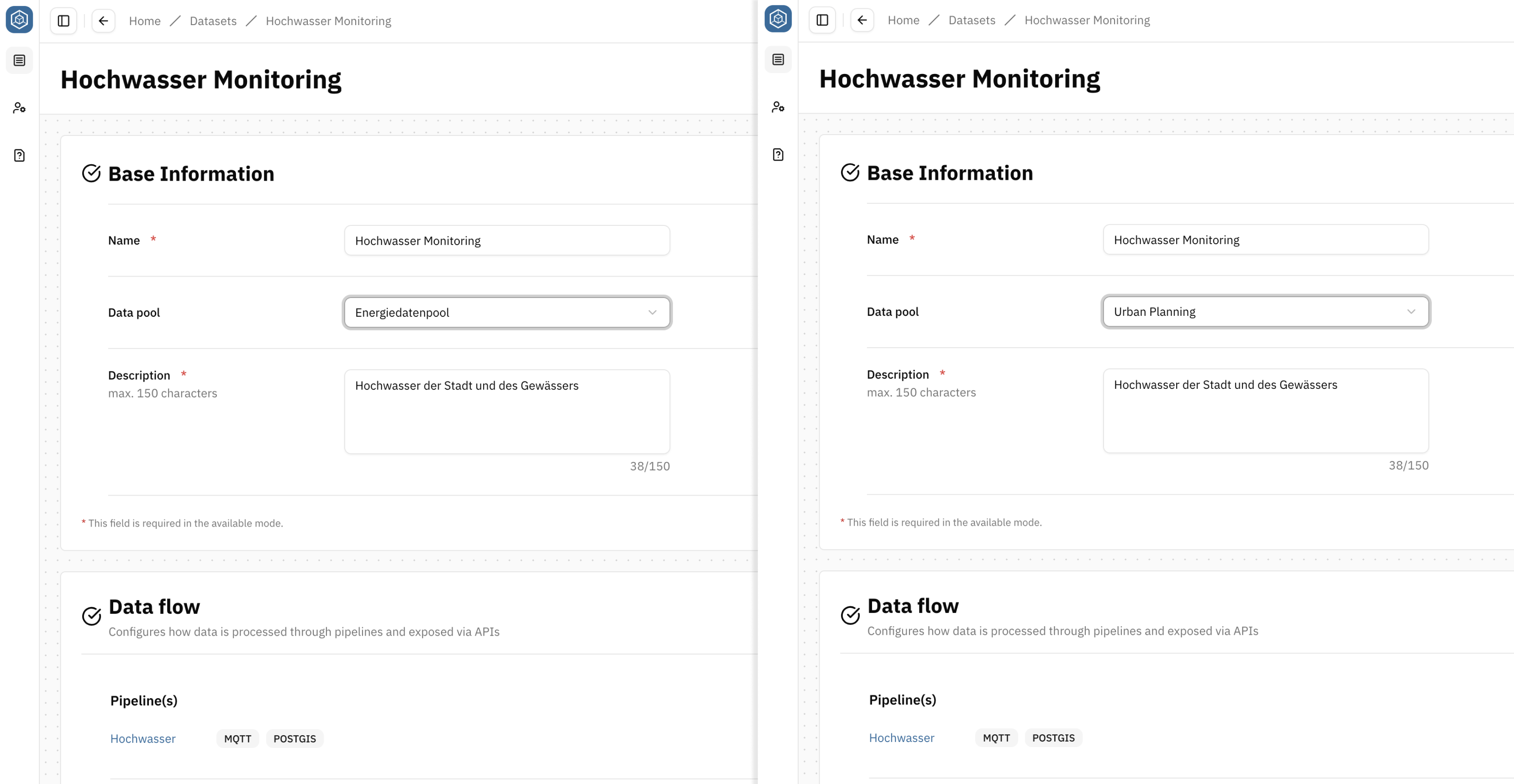
Moving a DatasetDatasetA data-related element that contains processed data and makes it available for consumption. A Dataset is populated via Pipelines and carries Metadata and access permissions. to another Data poolData poolA governed, centralized collection of Datasets that are managed together within the Platform. It provides a shared place to organize, discover, and access data, including associated metadata, ownership, and access permissions. With Data pools users can cluster their Datasets according to their organizational structure (e.g., by Departments, Offices). may affect access permissions. Review the permissions of the target Data poolData poolA governed, centralized collection of Datasets that are managed together within the Platform. It provides a shared place to organize, discover, and access data, including associated metadata, ownership, and access permissions. With Data pools users can cluster their Datasets according to their organizational structure (e.g., by Departments, Offices). before making changes.
Create a new Dataset within a Data pool
- Open the Data poolData poolA governed, centralized collection of Datasets that are managed together within the Platform. It provides a shared place to organize, discover, and access data, including associated metadata, ownership, and access permissions. With Data pools users can cluster their Datasets according to their organizational structure (e.g., by Departments, Offices).
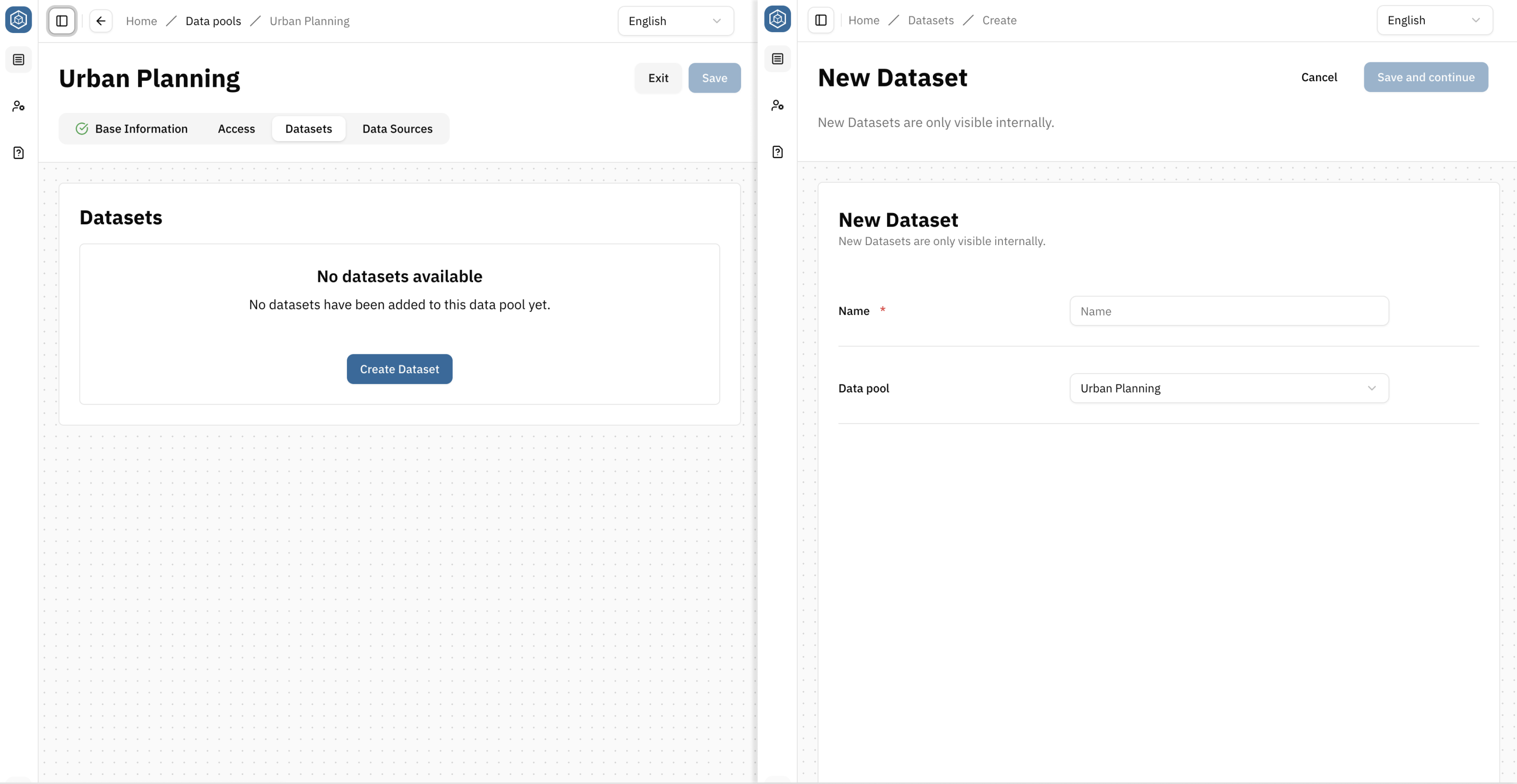
- Navigate to the DatasetsDatasetA data-related element that contains processed data and makes it available for consumption. A Dataset is populated via Pipelines and carries Metadata and access permissions. tab
- Select Create DatasetDatasetA data-related element that contains processed data and makes it available for consumption. A Dataset is populated via Pipelines and carries Metadata and access permissions.
- Complete the DatasetDatasetA data-related element that contains processed data and makes it available for consumption. A Dataset is populated via Pipelines and carries Metadata and access permissions. creation process
The selected Data poolData poolA governed, centralized collection of Datasets that are managed together within the Platform. It provides a shared place to organize, discover, and access data, including associated metadata, ownership, and access permissions. With Data pools users can cluster their Datasets according to their organizational structure (e.g., by Departments, Offices). is automatically assigned to the new DatasetDatasetA data-related element that contains processed data and makes it available for consumption. A Dataset is populated via Pipelines and carries Metadata and access permissions..
Configure access on Data pool level
In the Access tab, you define which Groups can access and manage the Data poolData poolA governed, centralized collection of Datasets that are managed together within the Platform. It provides a shared place to organize, discover, and access data, including associated metadata, ownership, and access permissions. With Data pools users can cluster their Datasets according to their organizational structure (e.g., by Departments, Offices). itself.
→ Depending on the assigned Role, the same assignment can also grant access to all contained DatasetsDatasetA data-related element that contains processed data and makes it available for consumption. A Dataset is populated via Pipelines and carries Metadata and access permissions.. This allows access to multiple DatasetsDatasetA data-related element that contains processed data and makes it available for consumption. A Dataset is populated via Pipelines and carries Metadata and access permissions. to be managed through a single Group and Role assignment.
Choose an access strategy
| Strategy | Example | Result | Recommended |
|---|---|---|---|
| Centralized access management | Assign a Group to the Data Steward Role on Data poolData poolA governed, centralized collection of Datasets that are managed together within the Platform. It provides a shared place to organize, discover, and access data, including associated metadata, ownership, and access permissions. With Data pools users can cluster their Datasets according to their organizational structure (e.g., by Departments, Offices). level | Group members can manage the Data poolData poolA governed, centralized collection of Datasets that are managed together within the Platform. It provides a shared place to organize, discover, and access data, including associated metadata, ownership, and access permissions. With Data pools users can cluster their Datasets according to their organizational structure (e.g., by Departments, Offices). and all contained DatasetsDatasetA data-related element that contains processed data and makes it available for consumption. A Dataset is populated via Pipelines and carries Metadata and access permissions. through a single assignment | ✅ yes |
| Combined access management | Assign a large Group to the Data Consumer Role on Data poolData poolA governed, centralized collection of Datasets that are managed together within the Platform. It provides a shared place to organize, discover, and access data, including associated metadata, ownership, and access permissions. With Data pools users can cluster their Datasets according to their organizational structure (e.g., by Departments, Offices). level and manage additional Roles on individual DatasetsDatasetA data-related element that contains processed data and makes it available for consumption. A Dataset is populated via Pipelines and carries Metadata and access permissions. | All users can discover and read DatasetsDatasetA data-related element that contains processed data and makes it available for consumption. A Dataset is populated via Pipelines and carries Metadata and access permissions., while editing permissions remain controlled on individual DatasetsDatasetA data-related element that contains processed data and makes it available for consumption. A Dataset is populated via Pipelines and carries Metadata and access permissions. | ✅ yes |
| Organizational grouping only | Assign a custom Data poolData poolA governed, centralized collection of Datasets that are managed together within the Platform. It provides a shared place to organize, discover, and access data, including associated metadata, ownership, and access permissions. With Data pools users can cluster their Datasets according to their organizational structure (e.g., by Departments, Offices).-specific Role without DatasetDatasetA data-related element that contains processed data and makes it available for consumption. A Dataset is populated via Pipelines and carries Metadata and access permissions. permissions on Data poolData poolA governed, centralized collection of Datasets that are managed together within the Platform. It provides a shared place to organize, discover, and access data, including associated metadata, ownership, and access permissions. With Data pools users can cluster their Datasets according to their organizational structure (e.g., by Departments, Offices). level | The Data poolData poolA governed, centralized collection of Datasets that are managed together within the Platform. It provides a shared place to organize, discover, and access data, including associated metadata, ownership, and access permissions. With Data pools users can cluster their Datasets according to their organizational structure (e.g., by Departments, Offices). is used for organization only. DatasetDatasetA data-related element that contains processed data and makes it available for consumption. A Dataset is populated via Pipelines and carries Metadata and access permissions. permissions are managed independently | ⚠️ Advanced use case |
Assign Groups and Roles on Data pool level
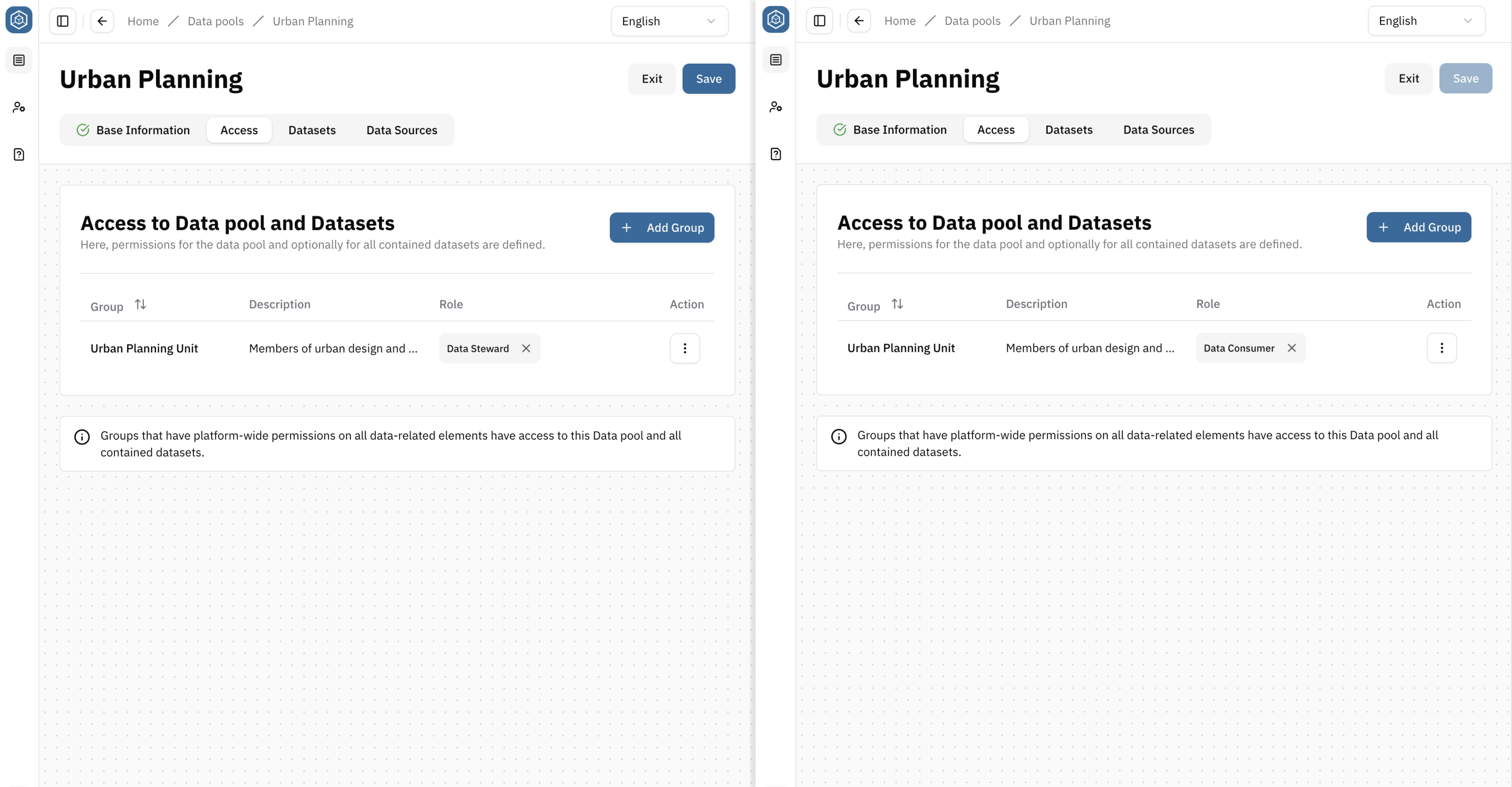
- Open the Access tab
- Add a Group
- Assign a Role to the Group
- Repeat these steps to add more Groups and Roles
- Hit Save
For a detailed explanation of permission inheritance and authorization concepts, see → Authorisation.
Review Datasets and Data sources
The Data poolData poolA governed, centralized collection of Datasets that are managed together within the Platform. It provides a shared place to organize, discover, and access data, including associated metadata, ownership, and access permissions. With Data pools users can cluster their Datasets according to their organizational structure (e.g., by Departments, Offices). detail view provides an overview of the DatasetsDatasetA data-related element that contains processed data and makes it available for consumption. A Dataset is populated via Pipelines and carries Metadata and access permissions. and Data sourcesData sourceA data-related element that represents the origin of data. It defines how data is connected, accessed, and ingested into the Platform, such as an external database or sensor network. associated with the Data poolData poolA governed, centralized collection of Datasets that are managed together within the Platform. It provides a shared place to organize, discover, and access data, including associated metadata, ownership, and access permissions. With Data pools users can cluster their Datasets according to their organizational structure (e.g., by Departments, Offices)..
Tab DatasetsDatasetA data-related element that contains processed data and makes it available for consumption. A Dataset is populated via Pipelines and carries Metadata and access permissions.: View all DatasetsDatasetA data-related element that contains processed data and makes it available for consumption. A Dataset is populated via Pipelines and carries Metadata and access permissions. assigned to the Data poolData poolA governed, centralized collection of Datasets that are managed together within the Platform. It provides a shared place to organize, discover, and access data, including associated metadata, ownership, and access permissions. With Data pools users can cluster their Datasets according to their organizational structure (e.g., by Departments, Offices)..
Tab Data sourcesData sourceA data-related element that represents the origin of data. It defines how data is connected, accessed, and ingested into the Platform, such as an external database or sensor network.: View all Data sourcesData sourceA data-related element that represents the origin of data. It defines how data is connected, accessed, and ingested into the Platform, such as an external database or sensor network. that have been released for the Data poolData poolA governed, centralized collection of Datasets that are managed together within the Platform. It provides a shared place to organize, discover, and access data, including associated metadata, ownership, and access permissions. With Data pools users can cluster their Datasets according to their organizational structure (e.g., by Departments, Offices). and are available for use by its DatasetsDatasetA data-related element that contains processed data and makes it available for consumption. A Dataset is populated via Pipelines and carries Metadata and access permissions..
Restrict Data sources for Data pools
Data sourceData sourceA data-related element that represents the origin of data. It defines how data is connected, accessed, and ingested into the Platform, such as an external database or sensor network. availability for Data poolsData poolA governed, centralized collection of Datasets that are managed together within the Platform. It provides a shared place to organize, discover, and access data, including associated metadata, ownership, and access permissions. With Data pools users can cluster their Datasets according to their organizational structure (e.g., by Departments, Offices). is configured in the Data sourceData sourceA data-related element that represents the origin of data. It defines how data is connected, accessed, and ingested into the Platform, such as an external database or sensor network. detail view.
→ By releasing a Data sourceData sourceA data-related element that represents the origin of data. It defines how data is connected, accessed, and ingested into the Platform, such as an external database or sensor network. for one or more Data poolsData poolA governed, centralized collection of Datasets that are managed together within the Platform. It provides a shared place to organize, discover, and access data, including associated metadata, ownership, and access permissions. With Data pools users can cluster their Datasets according to their organizational structure (e.g., by Departments, Offices)., you control in which DatasetsDatasetA data-related element that contains processed data and makes it available for consumption. A Dataset is populated via Pipelines and carries Metadata and access permissions. the Data sourceData sourceA data-related element that represents the origin of data. It defines how data is connected, accessed, and ingested into the Platform, such as an external database or sensor network. can be selected during pipeline configuration. A Data sourceData sourceA data-related element that represents the origin of data. It defines how data is connected, accessed, and ingested into the Platform, such as an external database or sensor network. is only available in DatasetsDatasetA data-related element that contains processed data and makes it available for consumption. A Dataset is populated via Pipelines and carries Metadata and access permissions. that belong to a Data poolData poolA governed, centralized collection of Datasets that are managed together within the Platform. It provides a shared place to organize, discover, and access data, including associated metadata, ownership, and access permissions. With Data pools users can cluster their Datasets according to their organizational structure (e.g., by Departments, Offices). for which the Data sourceData sourceA data-related element that represents the origin of data. It defines how data is connected, accessed, and ingested into the Platform, such as an external database or sensor network. has been released.
For example, a Data sourceData sourceA data-related element that represents the origin of data. It defines how data is connected, accessed, and ingested into the Platform, such as an external database or sensor network. containing information about critical infrastructure may only be intended for specific organisational units and therefore be released only for selected Data poolsData poolA governed, centralized collection of Datasets that are managed together within the Platform. It provides a shared place to organize, discover, and access data, including associated metadata, ownership, and access permissions. With Data pools users can cluster their Datasets according to their organizational structure (e.g., by Departments, Offices)..
Data sources can be made available to:
- all Data poolsData poolA governed, centralized collection of Datasets that are managed together within the Platform. It provides a shared place to organize, discover, and access data, including associated metadata, ownership, and access permissions. With Data pools users can cluster their Datasets according to their organizational structure (e.g., by Departments, Offices).
- selected Data poolsData poolA governed, centralized collection of Datasets that are managed together within the Platform. It provides a shared place to organize, discover, and access data, including associated metadata, ownership, and access permissions. With Data pools users can cluster their Datasets according to their organizational structure (e.g., by Departments, Offices).
- no Data poolsData poolA governed, centralized collection of Datasets that are managed together within the Platform. It provides a shared place to organize, discover, and access data, including associated metadata, ownership, and access permissions. With Data pools users can cluster their Datasets according to their organizational structure (e.g., by Departments, Offices).
DatasetsDatasetA data-related element that contains processed data and makes it available for consumption. A Dataset is populated via Pipelines and carries Metadata and access permissions. without a Data poolData poolA governed, centralized collection of Datasets that are managed together within the Platform. It provides a shared place to organize, discover, and access data, including associated metadata, ownership, and access permissions. With Data pools users can cluster their Datasets according to their organizational structure (e.g., by Departments, Offices). assignment can only be targeted indirectly through the All Data poolsData poolA governed, centralized collection of Datasets that are managed together within the Platform. It provides a shared place to organize, discover, and access data, including associated metadata, ownership, and access permissions. With Data pools users can cluster their Datasets according to their organizational structure (e.g., by Departments, Offices). option. Assigning DatasetsDatasetA data-related element that contains processed data and makes it available for consumption. A Dataset is populated via Pipelines and carries Metadata and access permissions. to a Data poolData poolA governed, centralized collection of Datasets that are managed together within the Platform. It provides a shared place to organize, discover, and access data, including associated metadata, ownership, and access permissions. With Data pools users can cluster their Datasets according to their organizational structure (e.g., by Departments, Offices). is therefore recommended.
Restricting Data source availability allows you to:
- control which Data sourcesData sourceA data-related element that represents the origin of data. It defines how data is connected, accessed, and ingested into the Platform, such as an external database or sensor network. can be used within specific organisational areas
- reduce complexity for DatasetDatasetA data-related element that contains processed data and makes it available for consumption. A Dataset is populated via Pipelines and carries Metadata and access permissions. creators by showing only relevant Data sourcesData sourceA data-related element that represents the origin of data. It defines how data is connected, accessed, and ingested into the Platform, such as an external database or sensor network.
- support governance and compliance requirements
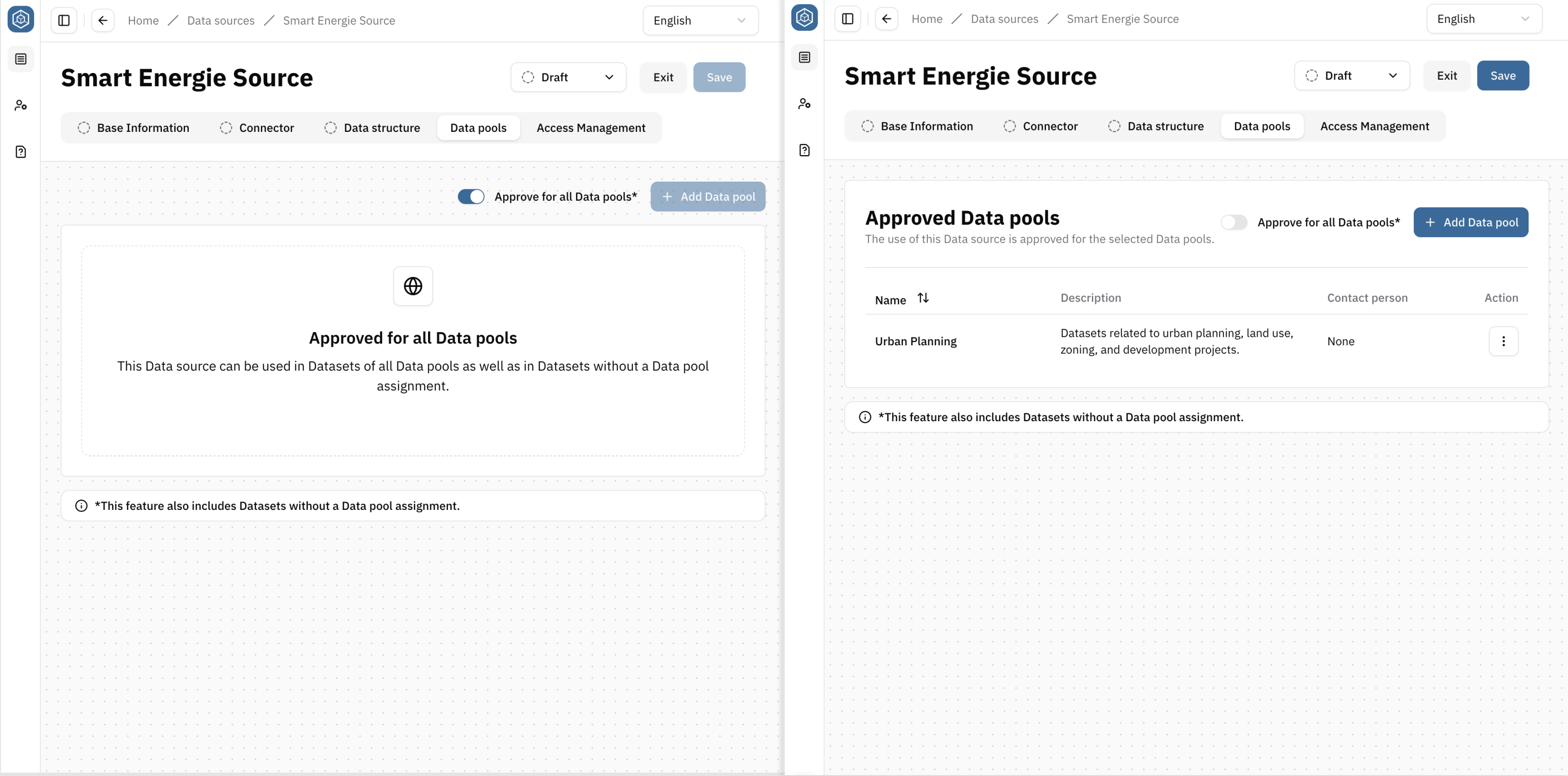
Configure Data source availability
- Open the Data sourceData sourceA data-related element that represents the origin of data. It defines how data is connected, accessed, and ingested into the Platform, such as an external database or sensor network. detail view
- Navigate to the Data poolsData poolA governed, centralized collection of Datasets that are managed together within the Platform. It provides a shared place to organize, discover, and access data, including associated metadata, ownership, and access permissions. With Data pools users can cluster their Datasets according to their organizational structure (e.g., by Departments, Offices). tab
Either: You keep the default setting "Approve for all Data poolsData poolA governed, centralized collection of Datasets that are managed together within the Platform. It provides a shared place to organize, discover, and access data, including associated metadata, ownership, and access permissions. With Data pools users can cluster their Datasets according to their organizational structure (e.g., by Departments, Offices)." (DE: Für alle Datenpools freigegeben) enabled. This makes the data sourceData sourceA data-related element that represents the origin of data. It defines how data is connected, accessed, and ingested into the Platform, such as an external database or sensor network. available to DatasetsDatasetA data-related element that contains processed data and makes it available for consumption. A Dataset is populated via Pipelines and carries Metadata and access permissions. in all Data poolsData poolA governed, centralized collection of Datasets that are managed together within the Platform. It provides a shared place to organize, discover, and access data, including associated metadata, ownership, and access permissions. With Data pools users can cluster their Datasets according to their organizational structure (e.g., by Departments, Offices)., as well as to DatasetsDatasetA data-related element that contains processed data and makes it available for consumption. A Dataset is populated via Pipelines and carries Metadata and access permissions. without a Data poolData poolA governed, centralized collection of Datasets that are managed together within the Platform. It provides a shared place to organize, discover, and access data, including associated metadata, ownership, and access permissions. With Data pools users can cluster their Datasets according to their organizational structure (e.g., by Departments, Offices). assignment.
Or: You disable the setting "Approve for all Data poolsData poolA governed, centralized collection of Datasets that are managed together within the Platform. It provides a shared place to organize, discover, and access data, including associated metadata, ownership, and access permissions. With Data pools users can cluster their Datasets according to their organizational structure (e.g., by Departments, Offices)." (DE: Für alle Datenpools freigegeben). In this case, you can specify the individual Data poolsData poolA governed, centralized collection of Datasets that are managed together within the Platform. It provides a shared place to organize, discover, and access data, including associated metadata, ownership, and access permissions. With Data pools users can cluster their Datasets according to their organizational structure (e.g., by Departments, Offices). for which this Data sourceData sourceA data-related element that represents the origin of data. It defines how data is connected, accessed, and ingested into the Platform, such as an external database or sensor network. should be released. If you disable the default setting without adding any specific Data poolsData poolA governed, centralized collection of Datasets that are managed together within the Platform. It provides a shared place to organize, discover, and access data, including associated metadata, ownership, and access permissions. With Data pools users can cluster their Datasets according to their organizational structure (e.g., by Departments, Offices)., the data sourceData sourceA data-related element that represents the origin of data. It defines how data is connected, accessed, and ingested into the Platform, such as an external database or sensor network. cannot be used in any DatasetDatasetA data-related element that contains processed data and makes it available for consumption. A Dataset is populated via Pipelines and carries Metadata and access permissions..
- Hit Save
Delete a Data pool
→ A Data poolData poolA governed, centralized collection of Datasets that are managed together within the Platform. It provides a shared place to organize, discover, and access data, including associated metadata, ownership, and access permissions. With Data pools users can cluster their Datasets according to their organizational structure (e.g., by Departments, Offices). can only be deleted when no DatasetsDatasetA data-related element that contains processed data and makes it available for consumption. A Dataset is populated via Pipelines and carries Metadata and access permissions. are assigned to it. Before deleting a Data poolData poolA governed, centralized collection of Datasets that are managed together within the Platform. It provides a shared place to organize, discover, and access data, including associated metadata, ownership, and access permissions. With Data pools users can cluster their Datasets according to their organizational structure (e.g., by Departments, Offices)., open each contained DatasetDatasetA data-related element that contains processed data and makes it available for consumption. A Dataset is populated via Pipelines and carries Metadata and access permissions. and decide:
- assign it to another Data poolData poolA governed, centralized collection of Datasets that are managed together within the Platform. It provides a shared place to organize, discover, and access data, including associated metadata, ownership, and access permissions. With Data pools users can cluster their Datasets according to their organizational structure (e.g., by Departments, Offices). (recommended)
- remove its Data poolData poolA governed, centralized collection of Datasets that are managed together within the Platform. It provides a shared place to organize, discover, and access data, including associated metadata, ownership, and access permissions. With Data pools users can cluster their Datasets according to their organizational structure (e.g., by Departments, Offices). assignment
To delete a Data poolData poolA governed, centralized collection of Datasets that are managed together within the Platform. It provides a shared place to organize, discover, and access data, including associated metadata, ownership, and access permissions. With Data pools users can cluster their Datasets according to their organizational structure (e.g., by Departments, Offices).
- Open Data poolsData poolA governed, centralized collection of Datasets that are managed together within the Platform. It provides a shared place to organize, discover, and access data, including associated metadata, ownership, and access permissions. With Data pools users can cluster their Datasets according to their organizational structure (e.g., by Departments, Offices).
- Locate the Data poolData poolA governed, centralized collection of Datasets that are managed together within the Platform. It provides a shared place to organize, discover, and access data, including associated metadata, ownership, and access permissions. With Data pools users can cluster their Datasets according to their organizational structure (e.g., by Departments, Offices). in the table
- Select Delete from the Actions column
- Confirm the deletion
The Data poolData poolA governed, centralized collection of Datasets that are managed together within the Platform. It provides a shared place to organize, discover, and access data, including associated metadata, ownership, and access permissions. With Data pools users can cluster their Datasets according to their organizational structure (e.g., by Departments, Offices). is removed from the Platform.
Best Practices
Recommended
- ✅ Organize Data poolsData poolA governed, centralized collection of Datasets that are managed together within the Platform. It provides a shared place to organize, discover, and access data, including associated metadata, ownership, and access permissions. With Data pools users can cluster their Datasets according to their organizational structure (e.g., by Departments, Offices). according to organisational responsibilities
- ✅ Use Data poolsData poolA governed, centralized collection of Datasets that are managed together within the Platform. It provides a shared place to organize, discover, and access data, including associated metadata, ownership, and access permissions. With Data pools users can cluster their Datasets according to their organizational structure (e.g., by Departments, Offices). to simplify permission management
- ✅ Reuse Data poolsData poolA governed, centralized collection of Datasets that are managed together within the Platform. It provides a shared place to organize, discover, and access data, including associated metadata, ownership, and access permissions. With Data pools users can cluster their Datasets according to their organizational structure (e.g., by Departments, Offices). for related DatasetsDatasetA data-related element that contains processed data and makes it available for consumption. A Dataset is populated via Pipelines and carries Metadata and access permissions.
Avoid
- ❌ Creating a Data poolData poolA governed, centralized collection of Datasets that are managed together within the Platform. It provides a shared place to organize, discover, and access data, including associated metadata, ownership, and access permissions. With Data pools users can cluster their Datasets according to their organizational structure (e.g., by Departments, Offices). for every DatasetDatasetA data-related element that contains processed data and makes it available for consumption. A Dataset is populated via Pipelines and carries Metadata and access permissions.
- ❌ Duplicating permission assignments unnecessarily
Related Articles
→ Core Concepts → Authorisation → Connect external data → Release Data